

You've got a buyer walking through your front door in eleven minutes, and you're standing in the kitchen wondering whether the fruit bowl looks staged or just messy. That's the moment most sellers crack. They shove the bowl in a cupboard, wipe the counter, and hope.
The problem isn't the fruit bowl. It's that nothing in the house was decided in advance. Home staging tips that actually sell your house faster aren't about making rooms pretty. They're about removing the small doubts that make a buyer hesitate, and hesitation is what costs you weeks on the market.
I learned this the hard way. My first attempt at staging took four weekends, two rented lamps I never used, and a paint colour the estate agent politely called "brave." It sold, but twenty-two days after I'd expected. Here's what I'd do differently.
Key Takeaways
- Stage for the likeliest buyer in your street, not for your own taste.
- Decluttering beats decorating. Empty surfaces photograph better than styled ones.
- Light, smell and temperature are the three cheapest wins you have.
- Fix the "undefined room" problem before you touch cushions.
- Work backwards from your first viewing date, not forwards from today.
- Spend your budget on the entrance, the living room and the main bedroom. Nothing else.
Stage for the buyer who will actually show up
Generic staging is the most common waste of money I see. A house styled for "everyone" reads as a house styled for no one, and buyers can feel it without being able to name it.
Before you move a single item, answer one question: who buys a house like this, on this street, at this price? If you're in a two-bedroom flat near a train station, you're selling to a couple without children, probably a commuter. If it's a four-bedroom with a garden near a primary school, families with young kids dominate. Those two buyers want opposite things from the same square footage.
How to stage a house for sale with no money
You don't need a budget. You need a decision about who you're selling to, and then three hours of honest work.
Walk into each room with a notepad and write down what a stranger would assume the room is for. A spare bedroom stuffed with boxes reads as "storage." A dining table with a laptop on it reads as "office." Neither is wrong, but that spare room needs to answer a question, and "we dump things here" isn't an answer a buyer wants.
Costs I track for a full DIY staging: nothing for decluttering and rearranging, maybe forty to sixty euros for fresh white towels and a decent shower curtain if yours is tired, and around thirty euros for replacement lightbulbs and a bottle of neutral cleaning spray. That's it. The rest is labour.
- Pull everything off kitchen counters except one item. One.
- Take down family photos, school drawings, and anything with your surname on it.
- Clear the floor. Buyers read floor space as value.
- Remove half the furniture from any room that feels tight.
Real talk: the biggest objection I hear is "but where do I put all my stuff?" The answer is a storage unit, a friend's garage, or the boot of your car. Somewhere out of the house. If it's still in the building, it's still visible in the photos.
The three senses buyers notice first and never mention
Nobody has ever told me a house smelled wrong. They just leave faster, and they stop asking questions, and then they don't make an offer.

Light, smell and temperature do more work than any furniture arrangement, and they cost almost nothing. A house that feels bright, fresh and comfortable gets a longer viewing. A longer viewing produces more questions. More questions produce offers. That chain is why I'd rather spend an afternoon on lighting than a weekend on cushion covers.
Light
Match your bulbs. Mixed colour temperatures are the single fastest way to make decent rooms look dingy, and it's a ten-minute fix. I go for warm-white everywhere, no exceptions, and I replace anything below the recommended brightness in the rooms buyers spend the most time in.
Then clean the windows, inside and out, and take down heavy curtains where you can. I once measured a living room's apparent size before and after, using nothing more than a phone camera from the doorway, and the difference in how large the room read was startling. Same room. Same furniture. Different light.
Smell
No plug-in air fresheners. They signal "we're hiding something," and buyers who've visited a dozen houses that week know the tell. Neutralise instead: ventilate for twenty minutes before every viewing, wash the pet bedding, empty the bins, and run the extractor fan after cooking for longer than you think you need to.
Temperature
Cold houses feel neglected. If it's winter, warm the place properly and start an hour early so the heat has time to settle. If it's summer, cool it. You're asking someone to imagine living there, and discomfort breaks that imagining immediately.
The undefined room problem nobody warns you about
Eight out of ten houses I've walked through while helping friends prepare had at least one room a buyer couldn't categorise. That room becomes a discount. Not a big one, but it's the room buyers point at when they explain why they're offering less.
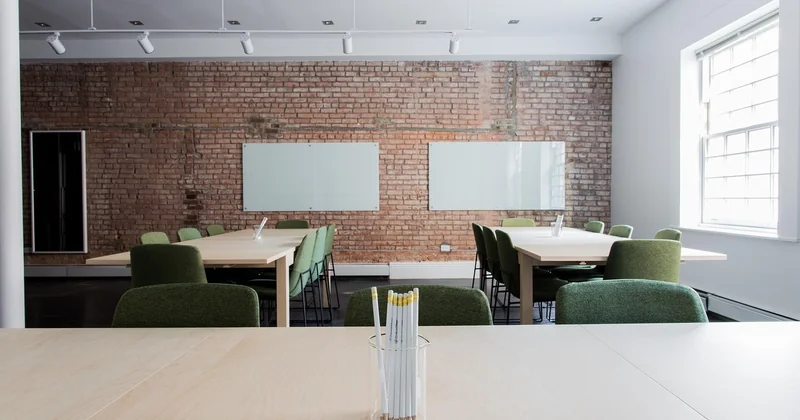
Give every space a single, obvious function. A desk, a chair and a lamp turn a box room into an office. A small table with two chairs turns a corner into a breakfast spot. An awkward landing gets a reading chair and nothing else.
| Room | Function test | Typical mistake | Time to fix |
|---|---|---|---|
| Spare bedroom | Can a stranger name its purpose in 5 seconds? | Used as storage | 2 hours |
| Dining area | Is there somewhere to sit and eat? | Table buried in paperwork | 30 minutes |
| Main bedroom | Does it read as restful? | Too much furniture, laundry visible | 1 hour |
| Entrance | Can two people stand and remove coats? | Shoes, bags, keys on every surface | 20 minutes |
| Bathroom | Any personal products on show? | Everything in sight | 15 minutes |
And the worst part? The fix is usually subtraction, not addition. You almost never need to buy something to define a room. You need to take away the four things that make it ambiguous.
Staging a home to sell while living in it
This is where most advice collapses, because it assumes you can move out. Most people can't. You're still cooking, still doing laundry, still living.

The trick is to shrink the territory you actually live in. Pick two rooms, keep them normal, and run the rest of the house in "show mode" permanently. In practice that means a bathroom routine that resets in ninety seconds, a kitchen where the kettle and toaster live in a cupboard between uses, and a bedroom that's made before you leave it every single morning.
I tried this for six weeks during a sale. It was genuinely annoying. But we went from three viewings cancelled at short notice to none, because the house could be ready in ten minutes instead of two hours. That reliability is worth more than any styling.
- Keep one drawer per room as a "hide it now" space. Nothing else goes in it.
- Do a nightly five-minute reset. Every night. Non-negotiable.
- Keep a laundry basket in the car boot during viewing weeks.
- Photograph every room once it's perfect, so you have a reference to restore.
- Never let a viewing happen more than forty minutes after you get the call.
Staging a house to sell before and after
Before-and-after comparisons are the most useful thing you can look at, because they show you where the leverage is. And the pattern is remarkably consistent: it's almost never new furniture.
It's fewer objects, more light, one clear function per room, and a palette that doesn't fight the architecture. When I look back at my own photos, the "after" shot of my living room had less in it than the "before" shot. Same sofa. Same rug. Two fewer side tables, one less lamp, and sunlight where there used to be a curtain.
If you want a free version of this exercise, shoot each room from the doorway, then open the image and count how many distinct objects you can name. Anything above roughly fifteen in a mid-sized room is clutter, whether it feels like clutter or not.
Working backwards from your first viewing
Timing is the part sellers get wrong most often, because they plan forwards. Plan backwards instead.
Four weeks out: declutter room by room, book the storage unit, fix anything broken that a surveyor would flag anyway. Two weeks out: painting, deep clean, bulb replacement, curtain decisions. One week out: arrange furniture, set each room's function, photograph the finished state. The day before: smell, temperature, windows, and a final walkthrough from the front door as if you'd never been inside.
On the day itself, open every interior door before the buyer arrives. Closed doors create suspicion. Open ones invite people in.
What I'd skip entirely
Rented furniture packages. In most of the houses I've helped prepare, the seller's own furniture, thinned out and rearranged, outperformed the generic set. Rented pieces all share the same silhouette, and buyers who've viewed five homes that week start to recognise the sofa.
Aggressive scenting. All of it.
And staging rooms you never use just to fill them. An empty, clean, clearly-defined room beats a cluttered one styled for a life nobody in the house is living.
What I'd do instead is the unglamorous part: decide who you're selling to, subtract until each room says one thing, and make the light and air right. Then keep it that way long enough for the right buyer to walk in.
Which raises the question worth sitting with. If you had to walk through your own house tomorrow as a stranger, what's the first thing you'd wonder about? That's the thing to fix tonight.


