

Forty-one thousand dollars. That's the average figure you'll land on if you type "kitchen remodel cost" into a search bar, and it's roughly what three contractors quoted me two years ago for a galley kitchen that isn't even particularly large. Two of those quotes, I should say, were within about a hundred dollars of each other — which felt less like a coincidence and more like a cartel with good manners.
The third quote came in at nineteen thousand. Same scope on paper. He walked the space, pulled out a tape measure, and started asking questions the others hadn't: Do you actually cook? Do you use the left side of this room? Have you ever once opened that corner cabinet? I couldn't answer the last one honestly, which turned out to be the whole point.
Planning a kitchen remodel on a realistic budget isn't about finding cheaper materials. It's about deciding what the room is actually for before anyone touches a single tile.
Key Takeaways
- Realistic kitchen budgets depend far more on layout changes than on material choices — moving a sink can cost more than every fixture combined.
- The 30% rule caps your project at 30% of the home's value, but it's a ceiling, not a target.
- Keeping cabinets and replacing only doors and hardware typically saves 40–60% versus full replacement.
- Always hold back 15% of the total budget as a contingency — I've never once seen a remodel finish exactly on estimate.
- The 3x4 kitchen rule is a minimum-efficiency guideline, not a design law, and your budget should respect it even if your aesthetic doesn't.
- Redesigning lighting and paint is the cheapest change that feels the most dramatic.
What does a realistic kitchen remodel budget actually look like?
Most people quote the national average, then subtract 20% as a "realistic" adjustment, then get shocked anyway. The average is real — kitchens genuinely cost tens of thousands — but it's also useless as a planning tool, because it blends a cosmetic refresh with a full structural rebuild into one number.
What you need instead is a range tied to scope.
The three scope levels
Every kitchen project I've worked on or watched falls into one of three buckets, and the budget gap between them is enormous.
- Cosmetic refresh ($2,000–$8,000). Paint, new hardware, a new faucet, updated lighting, maybe a backsplash. Layout and appliances stay put.
- Mid-scope renovation ($15,000–$40,000). New cabinets (not moved), new countertops, new appliances, some plumbing and electrical adjustments.
- Full remodel ($45,000 and up). Walls moved, sink or range relocated, permits pulled, subfloor and drywall work, the whole thing.
That middle band is where most homeowners actually live, and it's the band where the biggest surprises hide — because "new cabinets" sounds simple until you discover the old ones were scribed to a wall that isn't square.
Here's a comparison I wish someone had handed me before I started:
| Project type | Typical range | What drives the cost | Realistic timeline |
|---|---|---|---|
| Cosmetic refresh | $2,000–$8,000 | Paint, hardware, faucet, lighting | 1–2 weekends |
| Cabinet refacing / doors only | $5,000–$12,000 | Door quality, hinge count, drawer fronts | 1–2 weeks |
| Mid-scope renovation | $15,000–$40,000 | Cabinet boxes, countertops, appliances, minor plumbing | 4–8 weeks |
| Full structural remodel | $45,000–$90,000+ | Walls moved, permits, plumbing/electrical relocation | 3–6 months |
Notice that the jump from "doors only" to "new boxes" is roughly triple the price for something the eye barely registers from across the room. That single decision — reface versus replace — is the biggest budget lever most people never pull deliberately.
And speaking of that decision, I got it wrong the first time. I replaced the boxes. I didn't need to. The old ones were solid maple, and the only real problem was the doors, which were dated and one of which was warped. I paid roughly $9,000 more than necessary to solve a problem that a $3,200 refacing job would have fixed. I'm still a little annoyed about it.
What is the 30% rule in remodeling?
The 30% rule says you shouldn't spend more than 30% of your home's current market value on a kitchen remodel. On a $400,000 house, that's a $120,000 ceiling.
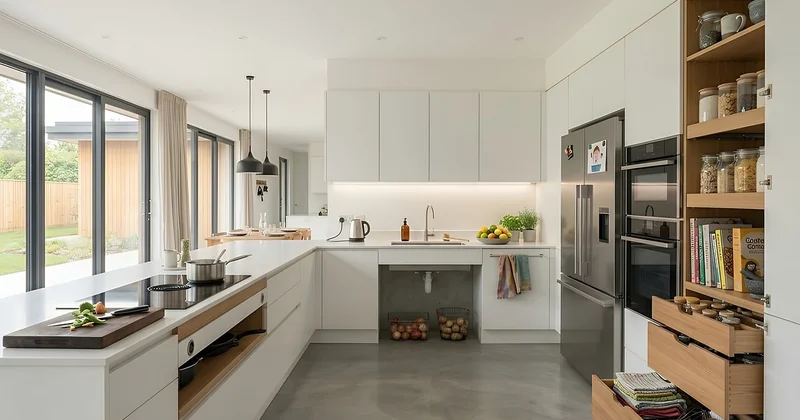
Here's what nobody tells you: it's not advice, it's a guardrail against catastrophe. Hitting the ceiling exactly doesn't make your project smart — it makes it the maximum you can spend without guaranteeing you'll lose money at resale. Most homeowners should be well under it.
I've seen this rule misapplied badly. A neighbor of mine used it as a target rather than a limit, spent almost 28% of her home's value on a kitchen with a wine fridge and a waterfall island, then sold two years later. The kitchen didn't hurt her sale, exactly. It just didn't help enough to justify the premium she'd paid to build it.
The rule is a ceiling. Treat it like the speed limit, not the speed you should drive.
What is the 3x4 kitchen rule?
The 3x4 kitchen rule is a minimum-efficiency guideline: a kitchen needs at least 3 meters of counter work space and 4 meters of total width (or the equivalent in feet, depending on who you ask) to function without constant collisions. Below that, two people can't cook at the same time, and the workflow collapses.
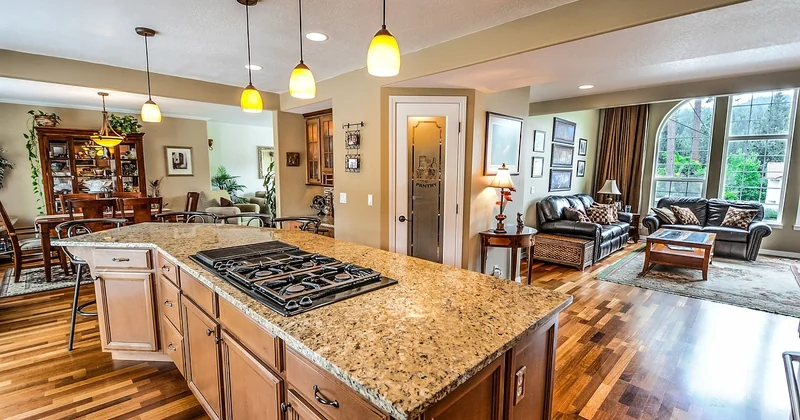
I'll be honest — I first heard this rule while arguing with a contractor about whether my proposed island would fit. It wouldn't, not without blocking the refrigerator door from opening fully. The rule saved me from a mistake that would have annoyed me daily for a decade.
What it means for your budget is more important than what it means for your design. If your kitchen falls below the 3x4 minimum, expanding the footprint usually costs more than everything else combined, because you're moving walls, plumbing, and possibly load-bearing structure. So you plan around the constraint. You accept that two cooks will bump into each other. You spend your money on better storage instead of a bigger room.
When you dip below the minimum
Small kitchens aren't disqualified — they just have different priorities. Stacked cabinets to the ceiling. Drawers instead of doors below the counter. A pull-out pantry that costs $600 and solves a problem a $6,000 wall-removal job can't. Once you're honest about the footprint you have, the budget writes itself a lot more easily.
What are some DIY kitchen makeovers I can do on a budget?
Plenty — but the honest answer is that most "budget makeover" advice online is written by people who've never actually painted a cabinet door, sanded between coats, and then watched the paint chip on day four because they used the wrong primer.

Here's what actually works, in order of effort-to-impact.
Paint the cabinets
This is the single highest-return DIY job in a kitchen, and also the most commonly botched. The real cost is materials — primer, sandpaper, a good brush, quality paint — and it runs $200–$500 for a typical kitchen. Labor is yours.
The failure point is always the same: people skip the sanding, or use a paint that doesn't adhere to factory finishes. I made both mistakes on my first attempt. The cabinets looked great for about a week. Then the edges around the handles started peeling, and I repainted them the right way — sanded, primed with a bonding primer, two thin coats. That version is still holding up three years later.
Replace hardware and lighting
New cabinet pulls and a new faucet cost a few hundred dollars together and change the visual weight of the whole room. Add under-cabinet lighting — a pre-wired LED strip kit is $80–$150 and can be installed in an afternoon — and a kitchen that felt dim and dated suddenly reads as intentional.
Keep the appliances
I'll die on this hill: unless something is broken, you do not need to replace working appliances to make a kitchen feel new. A stainless surround kit for an old but functional dishwasher costs $50. A new dishwasher costs $700–$1,200. The difference is invisible to anyone but you.
What I'd avoid: peel-and-stick tile on a backsplash behind a range (it warps under heat), self-adhesive countertop film near a sink (it lifts at the edges within a month), and any makeover that requires you to remove a cabinet without knowing if it's load-bearing.
How to build the actual budget
Here's the method I use now, after getting it wrong twice.
- Write down every line item you can think of, even the small ones — caulk, dumpster rental, permit fees. Most home budgets miss 5–10 items.
- Price each item at the high end of your range, not the low.
- Add 15% contingency on top of the total. If that number makes you wince, your scope is too big — not your contingency.
- Decide which three items you'd sacrifice if the money ran short. Write them down before you start. This sounds obsessive. It's saved me twice.
The contingency isn't pessimism — it's the opposite. It's what lets you say yes to a good surprise and no to a bad one without scrambling for a credit card.
Where the money actually hides: partial versus complete
Partial renovations — refacing cabinets, keeping the footprint, refreshing surfaces — typically save 40–60% versus a full gut. They're not compromises. They're a different design decision, and for most kitchens, they're the correct one.
I've now done both. The full remodel was beautiful and stressful and over budget by 22%. The partial one was 90% as beautiful, barely stressful, and came in 3% under estimate. If I had to choose again, I'd choose the partial one without hesitating.
The thing most people get wrong
A kitchen remodel isn't a purchase. It's a series of decisions, each one shaving off or adding thousands of dollars, and the ones that feel biggest — countertops, appliances, backsplash tile — are almost never the ones that actually move the number.
Layout does. Plumbing does. Moving a wall does. Those three decisions will dwarf every finish in the room combined, and they're the ones you should agonize over for weeks before you make them.
The finishes? Pick something you like and move on. The lighting under your cabinets will do more for the room than the exact shade of your quartz ever will.
Start with the layout question — can you live with the kitchen you have, or do you genuinely need to expand it? Answer that honestly, and the budget stops being something you guess and starts being something you build.


