

I still remember the first time a client told me she nearly walked away from buying her house because of the down payment. Not the mortgage. Not the credit score. The cash. She had a decent job, a solid credit history, and roughly $6,000 in savings. The house she wanted needed about $14,000 upfront between the down payment and closing costs. She was $8,000 short of a stable future, and no bank on earth was going to bend for her.
That gap is exactly what down payment assistance programs exist to close. But here's what nobody tells you when you're standing in that gap: these programs are not free money, they're not all equal, and picking the wrong one can cost you more than it saves. If you're searching for down payment assistance programs you should know about, the useful answer isn't a list of names. It's understanding how the money actually works.
Key takeaways
- Down payment assistance usually comes as a second loan, not a grant, and it often carries a higher rate than your first mortgage.
- For a $300,000 house, a 3% down payment is $9,000; for a $400,000 house at 3.5%, it's $14,000 — before closing costs.
- Most programs require a homebuyer education course and a household income below a set limit tied to your county.
- Forgivable loans typically require you to stay in the home 3 to 10 years, or you repay the money on sale.
- Stacking a second loan can push your debt-to-income ratio over the lender's ceiling and shrink what you can borrow.
How down payment assistance actually works
Most people imagine a check. It isn't. In the majority of cases, the help is structured as a subordinate lien — a second mortgage that sits behind your primary loan and gets repaid under specific conditions.
The three common structures
Broadly, you'll run into silent second mortgages, deferred-payment loans, and true grants. The first two are loans; only the third is money you keep without repaying. I've watched buyers assume "assistance" meant "gift" and get an unpleasant surprise at closing.
- Silent second: no monthly payment, no interest in some cases, forgiven entirely after you live in the home for a set number of years.
- Deferred loan: zero payments until you sell, refinance, or pay off the first mortgage — then the balance comes due.
- Grant: genuinely free, but far rarer and usually small, often capped at a few thousand dollars.
The catch is almost always the same: the money is tied to your occupancy. Leave too early and it converts to a repayable loan, sometimes with interest retroactive to day one.
The $10,000 and $20,000 numbers you keep seeing
Search for "$10,000 down payment assistance" or "$20,000 down payment assistance" and you'll find plenty of pages. Those figures are real in some markets, but they're ceilings, not promises. A program advertising up to $20,000 may cap you at $8,000 based on your income tier, the county's median income, and whether you're buying in a targeted area.
What surprised me most when I first started helping buyers through this: the amount scales inversely with your income. The closer you sit to the program's income limit, the less you get.
What's the biggest negative when using down payment assistance?
The biggest negative is that assistance often raises your overall cost of borrowing. It sounds counterintuitive — you're getting help, so why would it cost more? Because the second loan isn't free, and the first loan sometimes isn't either.

Higher rates and the debt-to-income squeeze
Many programs pair a below-market rate on the first mortgage with a second loan that carries a real interest rate — I've seen second liens priced a full point or two above the first. On top of that, the lender counts that second loan in your debt-to-income ratio. If your ratio was already near the ceiling, adding even a payment-deferred second can push you over and reduce the loan amount you qualify for.
There's also the early-exit problem. Sell or refinance before the forgiveness period ends and you repay the full balance. A buyer who planned to stay five years but took a job offer in another state at year three suddenly owed the entire assistance amount.
The honest answer: DPA is best for buyers who intend to stay put for at least the length of the forgiveness period and who genuinely cannot close the gap any other way.
How much of a down payment do you actually need?
The single most common question I get, and the one with the most misleading answers online.
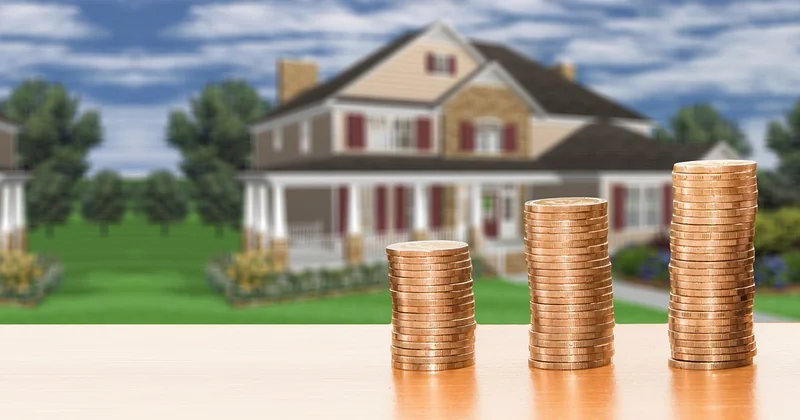
How much of a down payment do I need for a $400,000 house first time buyer?
It depends entirely on the loan type, and that's the part people miss. On a conventional first-time buyer loan, 3% down is common — that's $12,000 on a $400,000 house. An FHA loan typically starts at 3.5%, which is $14,000. A VA loan, if you qualify through military service, can require zero down. And a USDA loan in an eligible rural area also allows zero down.
But the down payment is only half the bill. Closing costs usually run 2% to 5% of the purchase price, so add another $8,000 to $20,000 on that $400,000 house. That's why buyers targeting $400,000 are often actually short $20,000 or more, not $12,000.
How much of a down payment do I need for a $300,000 house?
Run the same math. At 3%, you need $9,000. At 3.5%, $10,500. At 5%, $15,000. Add closing costs of roughly $6,000 to $15,000 and a $300,000 purchase realistically demands somewhere between $15,000 and $30,000 in cash at the table.
This is where I see the gap most clearly. A buyer with $12,000 saved feels ready for a $300,000 home until they realize the closing costs alone can eat most of it.
Is getting down payment assistance a good idea?
Yes — if you're going to stay in the home long enough to earn the forgiveness, and if the second loan doesn't wreck your qualification. No — if you're buying as a short-term move, or if a cheaper loan product already solves your gap.
My rule of thumb after working with these programs: compare the total cost of the assisted deal against a plain loan with a slightly higher rate and no second mortgage. Sometimes the plain loan wins. Buyers rarely run that comparison, and I've seen people take assistance they didn't need because it felt like a discount.
| Scenario | Down payment | Second loan | Best for |
|---|---|---|---|
| Conventional 3% | $9,000 on $300K | None | Strong credit, some savings |
| FHA 3.5% | $10,500 on $300K | None | Lower credit scores |
| Forgivable DPA second | Often $0–$5,000 | Forgiven after 5–10 years | Long-term stayers with a cash gap |
| Deferred DPA second | Often $0–$5,000 | Due on sale or refi | Buyers who may move |
Eligibility and the income limit nobody checks first
Before you fall in love with a program, check the income limit. It's the gate that stops most buyers.
What down payment assistance programs ask for
- Household income below a county-specific ceiling, usually tied to the area median income.
- First-time buyer status on many programs — though some define "first-time" as not having owned in the past three years.
- A completed homebuyer education course, often 6 to 8 hours.
- A minimum credit score, sometimes as low as 620, sometimes 660.
- The home must be your primary residence and fall under a price cap.
Programs vary wildly by state. Buyers in Pennsylvania, for example, deal with a different set of county limits than buyers in Texas, even when the federal framework is the same. If you're looking at down payment assistance programs in PA or anywhere else, start with your state housing finance agency — that's where the real numbers live, and the county limits decide whether you qualify before anything else matters.
The trap I see most often
Buyers shop for the biggest assistance amount instead of the best total deal. A $20,000 forgivable loan with a 7% first mortgage can cost more over ten years than a $0 assistance loan at 6.25%. Nobody advertises that math, because it doesn't sell.
Run the numbers on the whole package. Then decide whether you actually need help — or just need a cheaper loan.


