

Two families, same budget, same city, same weekend spent touring open houses. One ends up in a neighborhood where their kids walk to a friend's house every afternoon. The other spends two years fighting with a homeowners association about a fence and driving forty minutes to buy groceries. The house wasn't the difference. The neighborhood was.
I've watched this play out more times than I can count — as a buyer, as a seller, and as the friend people call before they sign anything. Choosing the right neighborhood for your family isn't a feel-good exercise. It's a research project with a deadline, and most buyers give it about three hours of real attention before falling in love with a kitchen backsplash.
Key Takeaways
- The best neighborhood data is boring, public, and free — school district records, county crime maps, property tax rates, and permit filings.
- Visit at least three times: a weekday rush hour, a weekend afternoon, and after dark on a Friday.
- The "3-3-3 rule" is a common real estate shorthand, but it covers two very different ideas depending on who's using it. Know which one you're talking about.
- Occupancy rules, not square footage alone, determine whether seven people fit in three bedrooms. In many places, legally, they do — practically, it depends on layout and local code.
- The right neighborhood for one family is a prison for another. Your tolerance for noise, distance, and density is the variable nobody lists in the property description.
How to choose the right neighborhood for your family without regret
Here's the thing: neighborhood regret is the most expensive kind. You can renovate a kitchen. You cannot move a school district, rezone a commercial lot, or convince a highway to be quieter.
So before you fall for a house, you build a shortlist of neighborhoods. Not addresses — neighborhoods. This is the shift most buyers skip, and it's the reason people end up touring homes they were never going to buy.
Start with the non-negotiables, then get specific
Write down five things that would make you genuinely unhappy, not five things that sound good on a list. Commute time under thirty minutes. A yard the dog can't escape from. A school your teenager won't resent. A grocery store you can reach without getting on the interstate. Whatever it is for your household — and it differs wildly from family to family.
Then rank them. Because when two neighborhoods tie on price and square footage, your ranking decides. In my experience, buyers who skip this step end up choosing on emotion and correcting on regret.
A family I know moved to a suburb with a top-rated district and a beautiful house. Six months in, the father was spending fourteen hours a week in the car — nearly two full working days, gone. They sold within eighteen months. The school was excellent. Everything else about their life got worse.
Use public data that actually tells you something
The tools are out there and most of them are free. Sites like AreaVibes give you a quick composite read on a neighborhood — crime, schools, amenities — and it's a fine starting point. But treat it like the first page of a report, not the conclusion.
Go deeper. County assessor websites show you property tax rates, recent sale prices, and how values have moved over five years. School district sites publish test scores, attendance rates, and — most useful of all — staff turnover. A school where teachers leave every year tells you something no rating captures.
And for safety, "check neighborhood safety by address" isn't vague advice. Most police departments publish incident maps you can filter by street and date range. Look at patterns, not single incidents. One car break-in on a block over five years is noise. A cluster of the same offense in the same three-month window is a signal.
What the apps won't tell you
Nextdoor is a goldmine and a trap. Read it, but read it critically. You'll learn about a lost cat crisis and a neighbor who's furious about a fence. What you're really looking for is the tone of disputes — do people resolve things, or do they escalate? A forum where every complaint turns into a three-week argument tells you more about the community than any crime statistic.
Apps also can't measure the thing that matters most: how the place feels at 6 p.m. on a Tuesday.
How to tell if it's a good neighborhood
Good neighborhoods aren't the same as expensive ones, and they aren't the same as quiet ones. They're places where the infrastructure of daily life works.
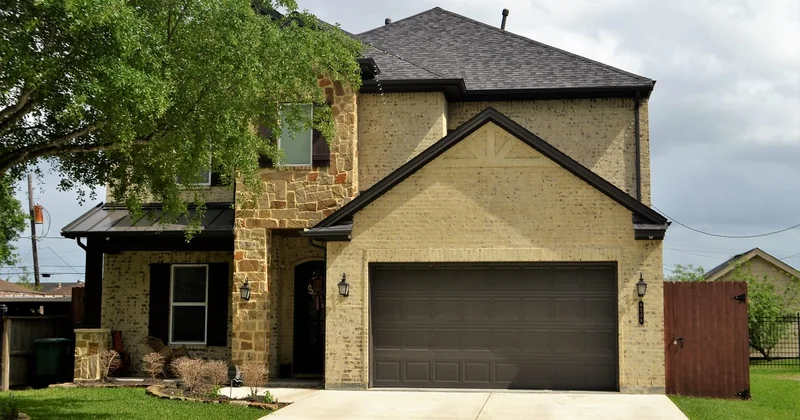
Here's a test I've used on every purchase: spend an hour walking, not driving. Walk to the nearest coffee shop, the nearest park, the nearest bus stop. Count how many people say hello. Count how many yards have kids' toys, garden tools, or anything suggesting someone actually lives there rather than just parks there at night.
The three-visit protocol
One visit is a blind date. Three visits is due diligence.
- Weekday rush hour — this is about traffic, school buses, and how hard it is to leave your own driveway.
- Weekend afternoon — noise, activity, whether the streets fill up with people or with parked cars from somewhere else.
- Friday or Saturday night, after dark — this one surprises people. Some blocks are lovely at noon and unbearable at 11 p.m.
If you can only do one, do the night visit. It's the one nobody does and the one that changes the most minds.
The neighbors are part of the purchase
Knock on three doors. Not to interrogate anyone — just to introduce yourself and ask one open question: "What's it like living here?"
People are remarkably honest when asked directly. If all three mention the same problem — flooding on the corner, a noisy rental, a school boundary fight — believe them. If all three give you a blank "it's fine," that's information too.
Ask specifically about the last five years. Neighborhoods change. A quiet street can become a cut-through route after one new development opens. A declining one can turn around after a park renovation. Nobody advertises trajectory, but longtime residents know it.
What is the 3-3-3 rule in real estate?
The 3-3-3 rule is a piece of shorthand that circulates in real estate circles, and it means different things depending on who's saying it. In its most common form, it refers to a down payment and financing framework: 3% down, a three-year ownership horizon, and a three-part affordability check covering income, debt, and reserves.

You'll also hear it used as a neighborhood-evaluation shortcut — three visits, three neighbors, three data sources. Same numbers, completely different advice.
Neither version is a rule in any formal sense. No regulation enforces it, and no lender requires it. Treat it as a mental checklist, not a law. And if someone quotes it to you as though it were official, ask which version they mean. In my experience, most people can't tell you.
Does it hold up?
Partly. The three-year horizon is decent advice for anyone who wants to avoid losing money on transaction costs, since selling too quickly usually eats the gains. The 3% down figure is real — several loan programs allow it — but it comes with trade-offs like mortgage insurance that raise your monthly payment.
The neighborhood version is the one I'd actually use. Three visits, three conversations, three data sources. It's not magic. It's just enough friction to stop you from buying on a single good afternoon.
Can a family of 7 live in a 3 bedroom?
Legally, in most places in the United States, yes. Occupancy standards generally work from a formula rather than a fixed bedroom count — commonly two people per bedroom plus one additional occupant, adjusted for the age and sex of the children and the size of the unit. A three-bedroom home frequently permits a household of seven under that framework.

Practically? That's a different question, and it has almost nothing to do with the number on the listing.
The numbers that actually matter
Square footage per person, bathroom count, and storage. Seven people sharing one bathroom is a logistics problem no amount of charm fixes. Look for at least 1,200 to 1,500 square feet, ideally more, and seriously consider whether a second full bath is negotiable or mandatory. For most large families, it's the latter.
Layout beats size. A 1,400-square-foot house with a finished basement, a usable attic, and a hallway that separates bedrooms can function better than a 1,700-square-foot open plan where every sound travels everywhere.
Check local code before you commit. Some municipalities have their own occupancy ordinances that are stricter than the general standard, and some homeowners associations restrict occupancy separately. This is the kind of thing that surfaces at the worst possible moment — after you've moved in.
What is the best neighborhood to live in Jacksonville, Florida?
There isn't one, and anyone who tells you otherwise is selling something. Jacksonville is enormous — over 800 square miles, the largest city by land area in the contiguous United States — and it contains neighborhoods that feel like different states.
What I can tell you is how to narrow it. The city splits roughly into the urban core, the Southside, the beaches, the Northside, and the Westside, and each has a different answer to the question "what do you need?"
Matching the area to your priorities
- Short commute to downtown and walkable streets — Riverside and Avondale. Older housing stock, tight community, higher price per square foot.
- Schools first — parts of Mandarin and the Southside. Verify district boundaries street by street, because they don't follow the lines you'd assume.
- Beach lifestyle — Jacksonville Beach, Neptune Beach, Atlantic Beach. Three separate municipalities with three separate tax structures.
- New construction and space — the outer Westside and parts of St. Johns County just south of the line. Longer drives, newer houses, different school district entirely.
The Florida-specific wrinkle: flood zones and insurance. A neighborhood that looks perfect on a map can carry an insurance premium that quietly adds hundreds of dollars a month. Pull the FEMA flood map for any address before you get attached. I've seen buyers walk away from a house they loved after one insurance quote, and they were right to.
Comparing your finalists
Once you're down to two or three neighborhoods, stop researching and start scoring. Here's the comparison framework that's served me best:
| Factor | What to check | Where to find it |
|---|---|---|
| School assignment | Exact boundary for the specific address | District website, not third-party apps |
| Property tax | Effective rate plus any special assessments | County assessor records |
| Safety patterns | Incidents by street over a multi-year window | Police department incident maps |
| Trajectory | Five-year sale price movement, new permits | Assessor data, municipal permit filings |
| Daily friction | Real drive time at rush hour, walkability | Your own three visits |
Score each neighborhood from one to five on every row, weighting the factors you ranked highest at the start. It feels mechanical. That's the point — it protects you from the house you love in the neighborhood that doesn't fit.
The question that actually decides it
After all the data, the crime maps, the school scores, the flood zones, and the neighbor conversations, one question settles it. Not "is this a good neighborhood?" but "is this our neighborhood?"
Those are different questions, and only one of them has an answer you can look up. The data narrows the field. It can't finish the job, because the last variable is your family's particular shape — how you spend a Saturday, how much driving you'll tolerate, how much quiet you actually need versus how much you claim to.
Buy the neighborhood. The house you can change. And be honest about which parts of your list are real and which are borrowed from someone else's idea of a good life. That's the part nobody puts in the listing, and it's the part that determines whether you're the family walking to a friend's house, or the one still fighting about the fence.


